3r4t- 30-50% prevalence
- <10% of dietary iron is absorbed
Causes of Iron deficieny
DNB 2005, 2013
Enlist the causes of iron deficiency Anemia (3)
- Anemia of prematurity
- top feeding (cow’s milk)
- undernutrition
- blood loss (ulcer, hemangioma, divverticulums)
- parasite infestation
- H.pylori infection
- menstruration
Clinical features
DNB 2013
Clinical features and approach to nutritional amemia
- Asymptomatic
- Pallor - hb falls to 7-8 g/dl
- in palprabral conjunctiva
- in nail beds
- tongue
- palmar creases
- cold intolerance
- fatigue
- exercise induced dyspnea
- decreased concentrationn
- irritability
- anorexia
- flow murmur ⇒ congestive cardiac failure
- seizure
- stroke
- breath holding spells
- pica
- pagophagy
clinical progression
DNB 2013
sequential pathogenical changes associated with iron deficiency states
- in the initial stages of negative iron balance, reserves in the form of ferritin and hemosiderin may maintain normal Hb and Hct levels
- further fall in iron causes decrease in serum iron and transferrin saturationn without causing anemia
- initially there will be erythroid hyperplasia
- anemia occur only when iron stores are completely depleted and is accompanied with lowerr than normal iron, ferritin and transferrin saturation levels
metabolism of iron in human body
DNB 2022/1
Describe the iron metabolism in the human body

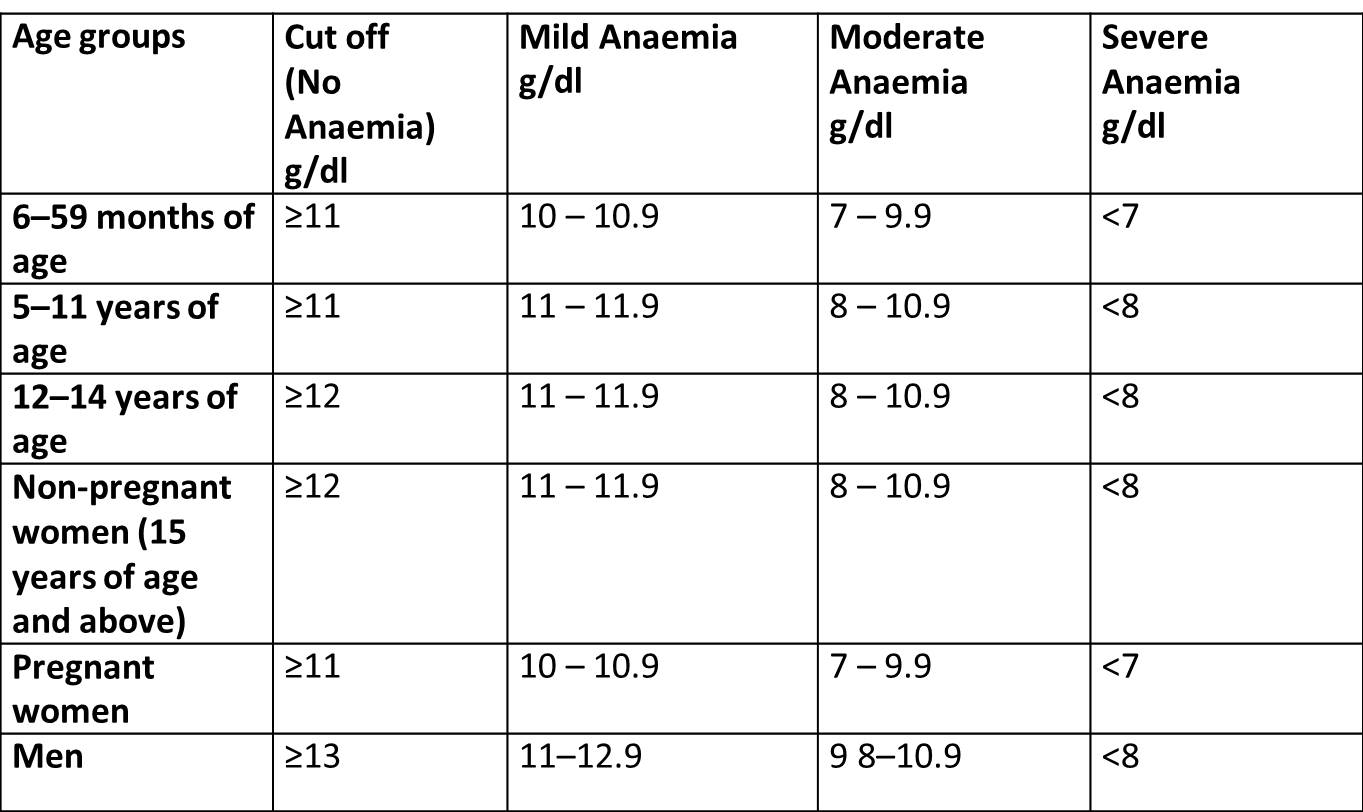
normal Hb values
<img src=https://i.ibb.co/tphBPvzp/image.png>
Diagnosis of IDA
DNB 2022
laboratory evaluation in the diagnosis of IDA
DNB 2024
role of redcell indices in the diagnosis of IDA
- Hb < 11
- MCV < 70 - late indicator
- S. ferritin <12 in less than 5 year, <15 in more than 5 year
- reticulocyte <27.5 in child, <28 in adult
- soluble transferrin receptor - increased
- tranferrin saturation <16%
- erythrocyte zinc porphyrin <5 year >70, >5 year >80
- hepacin <10 ng/ml
difference between other type of anemias
DNB 2013
What laboratory studies can be used to differentiate between different type of microcytic anemias

menzter index
- menzter index = MCV/ RBC
- if >13 - IDA
- if <13 - Thalassemia
Prevention of anemia
DNB 2018, DNB 1998
Prevention of iron deficiency anaemia in children
- encourage breast feeding atleast till 6 months of age
- avoid cow’s milk till 1 year (limit to 700 ml/day)
- routine screening at 9-12 months (AAP)
- milking of cord in neonate
- delayed cord clamping
- iron supplementation to preterm newborn
Treatment
DNB 2023/2, 1998/2
Treatment of iron deficiency anaemia in children
- oral
- ferrous sulfate
- 3-6 mg/kg/day
- max daily dose 200 mg/day
- inhibitor of absorption - calcium, fibre, oxalic acid, phytic acid
- enhancers of absorption - vitamin C
- Paraenteral iron
- indication
- poor compliance to oral drug
- malabsorption
- LMW IRON Dextran - only FDA approved
- indication
- iron overdose can cause hemosiderosis / yersenia infection
Follow up
- repeat Hb after 1 month
causes of non repsonse
- poor complicance
- incorrect dosing
- malabsorption
- concurrent PPI, antacid, tannins
- blood loss
- lead poisoning
- co existing infection
- other anemia
Response to iron
- continue for 8-10 weeks after Hb normalisation
| Time after iron administration | Response |
|---|---|
| 12-24 hours | decreased irritablity, increased appetide |
| 24-48 hours | erythroid hyperplasia |
| 48-72 hours | reticulocytosis |
| 4-30 days | increase in Hb |
| 1-3 months | repletion of iron stores |
IRIDA
- Iron resistant Iron deficiency Anemia
- AR disease
- mutation of TMPRSS 6 gene
- dysregualtion in hecidin
- onset - early saturation
- Labs - MCV - 45 to 60, transferrin saturation <5 %
- Management - paraenteral iron preparation