Molecular heterogeneity exists due to varying degrees of glycosylation, sialylation, and sulfonation, altering in vivo bioactivity and half-life.
LH half-life shorter (~20 minutes initial phase) than FSH.
Secretion and Regulation
Synthesized by common gonadotrope cells.
Secretion strictly controlled by pulsatile Gonadotropin-Releasing Hormone (GnRH).
Differential secretion modulated by GnRH pulse frequency: High frequency favors LH β-subunit expression; low frequency favors FSH β-subunit expression.
Continuous/non-pulsatile GnRH exposure downregulates receptors and suppresses gonadotropin release.
Inhibin B (Sertoli cells/Granulosa cells), Estrogen.
FSH
Positive Feedback
Activin (homodimers of inhibin β-subunit) stimulates FSH release.
Biological Effects in Males
LH: Binds receptors on Leydig cells. Stimulates adenylate cyclase/cAMP/PKA cascade. Upregulates P450scc to convert cholesterol to pregnenolone, driving testosterone synthesis.
FSH: Binds receptors on Sertoli cells. Stimulates gametogenesis, seminiferous tubule maturation, and secretion of Inhibin B and Anti-Müllerian Hormone (AMH).
Biological Effects in Females
LH: Binds receptors on Theca cells. Stimulates androgen (androstenedione) biosynthesis. Induces ovulation and luteinization of preovulatory follicle.
FSH: Binds receptors on Granulosa cells. Upregulates aromatase activity to convert theca-derived androgens into estradiol. Stimulates follicular maturation and inhibin secretion.
Posterior Pituitary Hormones (Neurohypophysis)
Anatomy and Synthesis
Posterior pituitary acts as storage/release site; does not synthesize hormones.
Hormones synthesized in magnocellular neurons of the paraventricular and supraoptic nuclei of the hypothalamus.
Transported down pituitary stalk via axonal transport.
Co-synthesized and transported with specific carrier proteins: Neurophysin I (for oxytocin) and Neurophysin II (for vasopressin).
Derived from precursor protein containing AVP, neurophysin II, and copeptin (stable biomarker).
Extremely short plasma half-life (5–10 minutes).
Regulation of Secretion
Osmotic Regulation (Primary): Mediated by osmoreceptors located outside the blood-brain barrier in circumventricular organs (Organum Vasculosum of the Lamina Terminalis [OVLT] and Subfornical Organ [SFO]).
Secretion threshold begins at plasma osmolality ~283 mOsm/kg.
Linear increase in AVP secretion up to maximum at ~320 mOsm/kg.
Non-Osmotic Regulation (Volume/Pressure): Mediated by baroreceptors in aortic arch and carotid sinus; signals relayed via vagus and glossopharyngeal nerves to nucleus tractus solitarius.
Hypovolemia and hypotension stimulate massive AVP release, overriding osmotic inhibition.
Other Stimulators: Angiotensin II, nausea, hypoglycemia, pain, physical stress.
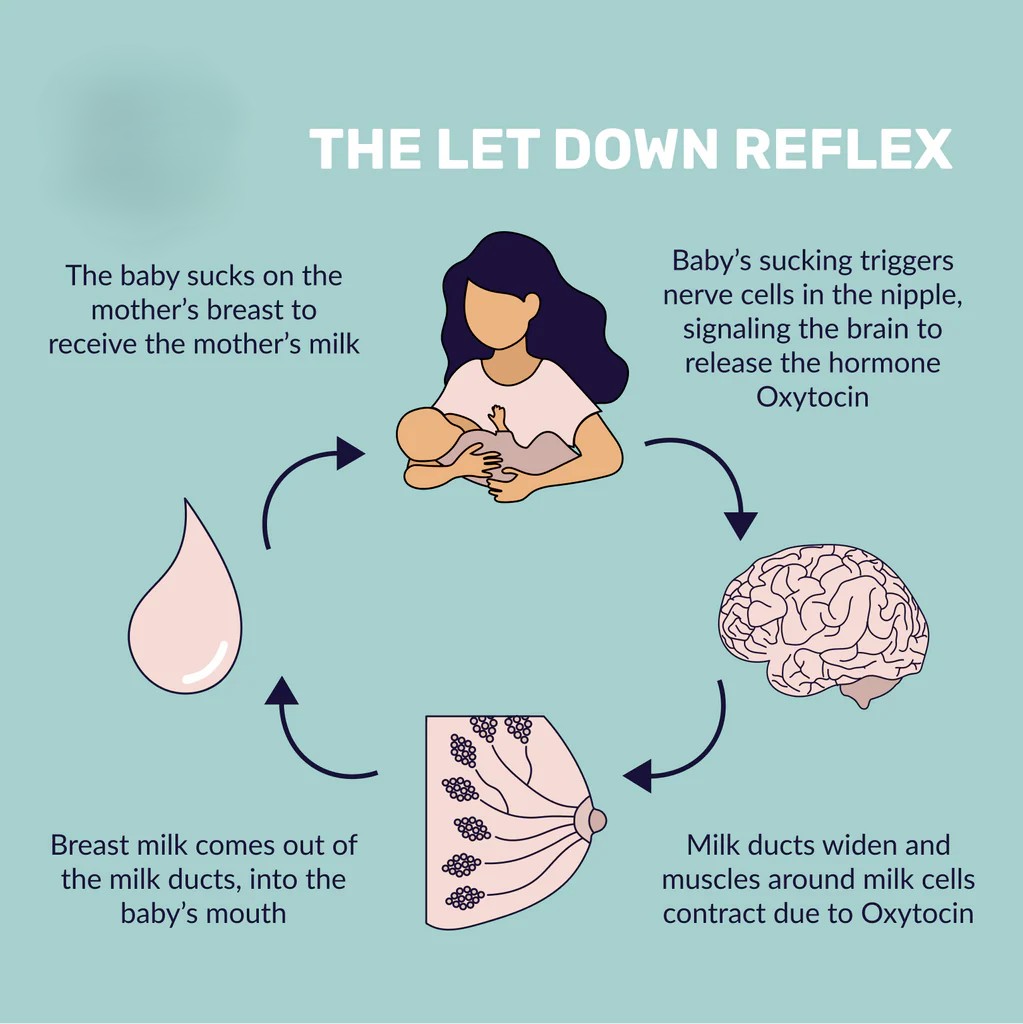
Stimulates myoepithelial cell contraction in the breast, mediating milk ejection (let-down reflex) during lactation.
Hypothalamic Regulation and the Portal System
Anterior pituitary relies exclusively on delivery of hypothalamic regulatory peptides via the hypophyseal portal venous system.
Peptides are synthesized in hypothalamic nuclei, secreted into the primary capillary plexus at the median eminence, and travel down portal veins to the anterior lobe.
GnRH (Gonadotropin-Releasing Hormone): Stimulates FSH and LH.
Key Inhibiting Hormones:
Somatostatin (GHIH): Inhibits GH and TSH.
Dopamine: Tonically inhibits PRL.
(Note: The integration of upstream hypothalamic signals dictates the ultimate secretory output of the anterior pituitary gland, whereas the posterior pituitary functions as a direct neural extension of the hypothalamus.)